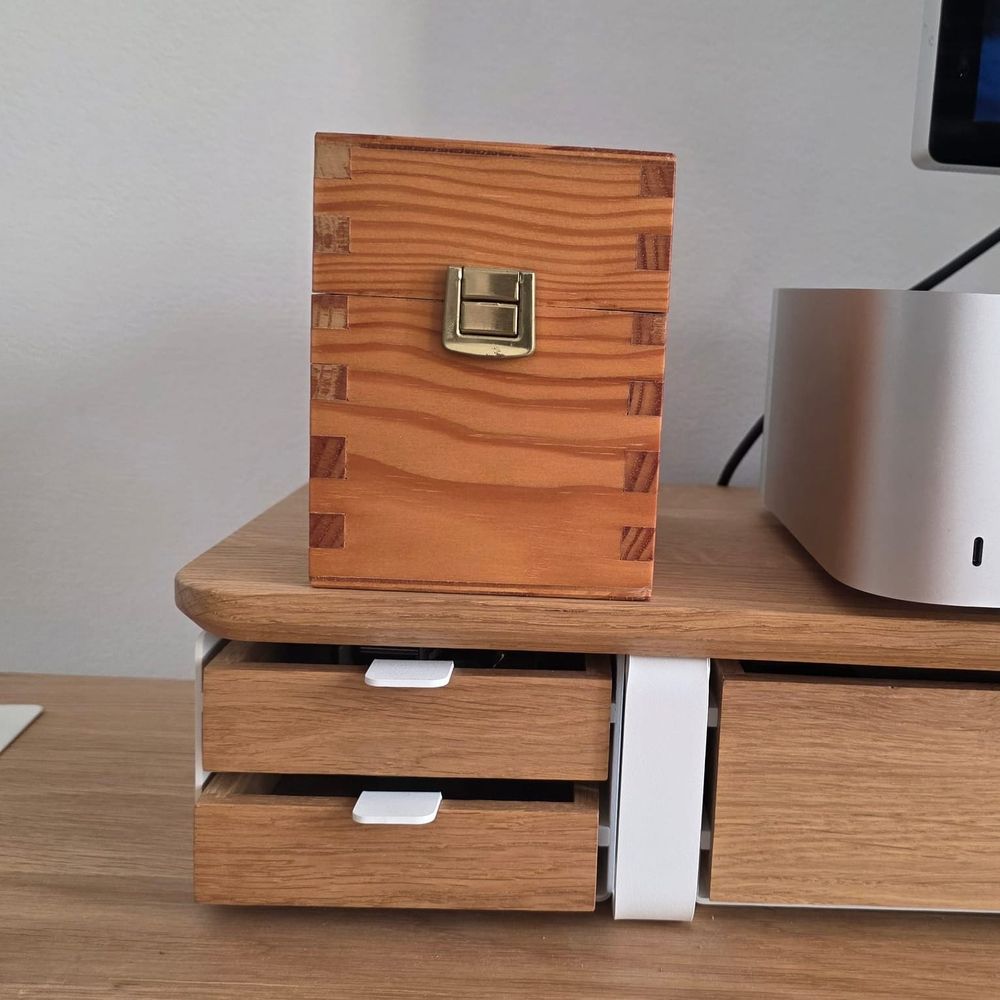
One of the problems I have with digital tools is that I find notifications irksome and turn them off. This then allows my inherent ill-discipline to ignore things entirely if I’m not in the mood.
There’s no reason I can’t ignore analogue tools, but I tend not to. Why not? Two reasons, I think. First, if I completely ignore my planner, there are consequences. There is no “overdue” tab that allows me to catch up. If I’ve ignored a week, then the only way to catch up is to trawl back page by page, or simply wait for a wheel to fall off somewhere. Secondly, noodling about in the analogue gives me pleasure, regardless of any measurable output. Put simply, I enjoy it.
I have found moving my task / time management into a Filofax rewarding. (I'll write this up.) However, some things have remained in the digital, because, well, some things just fit better there, don’t they?
I don’t produce an enormous amount of writing, or “content” as the cool kids call it, and it’s easy to forget to produce any at all. In an effort to stave off ill-discipline, I had set up a section in Todoist called “Content Calendar”, displaying as a kanban board and a calendar. It worked. At a glance, my team and I could see where everything sat, what deadlines were coming up. I could move things across the columns and get a clear view of where the pipeline was flowing and where it was stuck. A clear case of the power of the digital, particularly for collaboration.
Except...
There is no team. It’s just me. What I can actually see is a pile of “cards” waiting for me to populate them with an idea or title and start moving them across the columns. What I can actually see is a pile of tasks un-started. A big heap of procrastination. Could I do this analogue? The calendar is easy. I have lots of those in my planner. A fold out year is ideal for this. I have entered the publish dates for my “fixed (minimum)” content. Calendar. Done. What about the kanban?
Enter Foglietto. Remember them? This French company was around for four years, but closed its doors in early 2024. I think that the team behind Wonderpens in Canada may have taken over, but I’m not sure in what way. Anyway, I was a fan and have a couple of their beautiful boxes and a stock of the dinky A7 index cards.
Aha!
I recreated the kanban setup. I have six sections: 1. Ideas. 2. Research. 3. Drafting. 4. Editing. 5. Scheduled. 6 Archive.
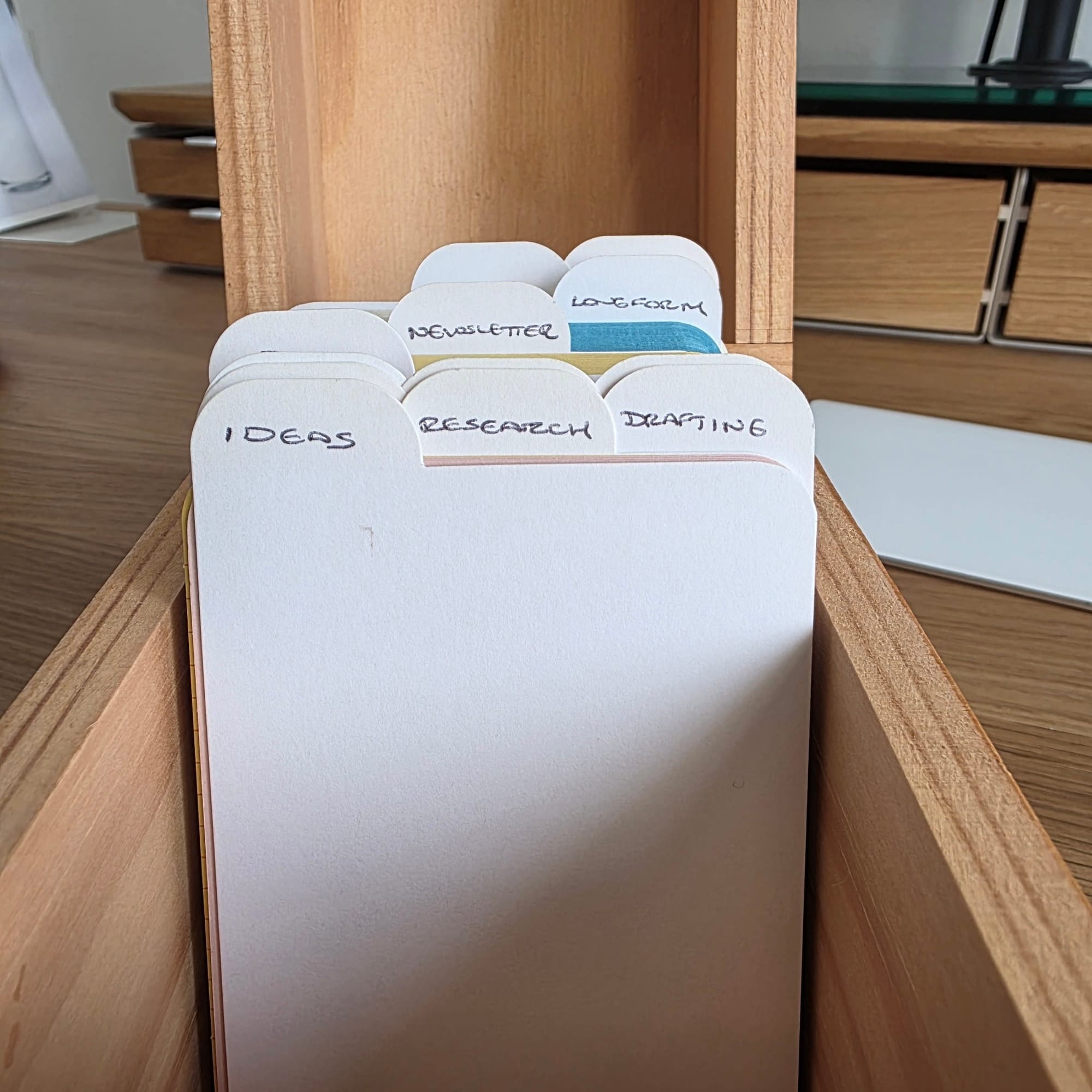
Every week, during my weekly review, I write some cards for the ideas section. These may have been captured in my planner or my pocket notebook or might exist only in my head.
I review the deadlines, and then check through sections 1 to 5. Do I have posts scheduled for the next deadlines? If not, do I have something in “Editing” that I can finish and schedule? And so on. Finally, I review ideas to check whether I want to start working on any of them - which will then move to the “research” section or the “drafting” section.
Behind the kanban, I have four more sections. “SL.com” for this blog, “Lime Blog” for my company blog, “Lime Newsletter” and “Longform”. Here, I store blank cards. Each section has its own colour, which allows me to see at a glance that there are a mix of channels in the various hoppers.
Simple, elegant, and requires no wifi or power.
People like you support my writing. Sign up for my free newsletter. Become a paid member, and get access to all my writing, including anything I publish, and a Member's Slack.