The visitor season is drawing to a close. My wife’s nephew has been with us for a week, and will soon escort his Mum back home to the UK. After a couple of months of visitors, the house will feel empty again. Nephew Robert had expressed an interest in the recent history of Cyprus, which retains Europe’s last divided capital. In fact, the island is split in two, the two sides kept separate by a United Nations peacekeeping force. We live in the internationally recognised Republic of Cyprus, the Greek-speaking south. It’s possible to visit the occupied north, or the Turkish Republic of Northern Cyprus, as the Turks (and noone else) would have it, but generally, we don’t. It’s a sensitive issue.
If you want to understand how the island got here, there’s plenty of resources online, I won’t go into it here. The division is most clearly seen in the capital, Nicosia, or at the eastern edge of the island, near the ghost city of Famagusta. Famagusta was, pre-invasion, a thriving port, city and tourist resort. It was the place to be.
Now, most of the city is in the occupied area. A significant chunk of the seafront, called Varosha, is in the UN buffer zone, abandoned, the buildings quietly rotting away. Robert and I drove to Deryneia, a small Greek town adjacent to the wire and visited its’ cultural centre. There, we watched a short film on the history and current status of Famagusta, before climbing to the roof with binoculars, where we were able to scan the guard posts, living city and ruined buildings. It’s eerie, scary, but overwhelmingly, sad.
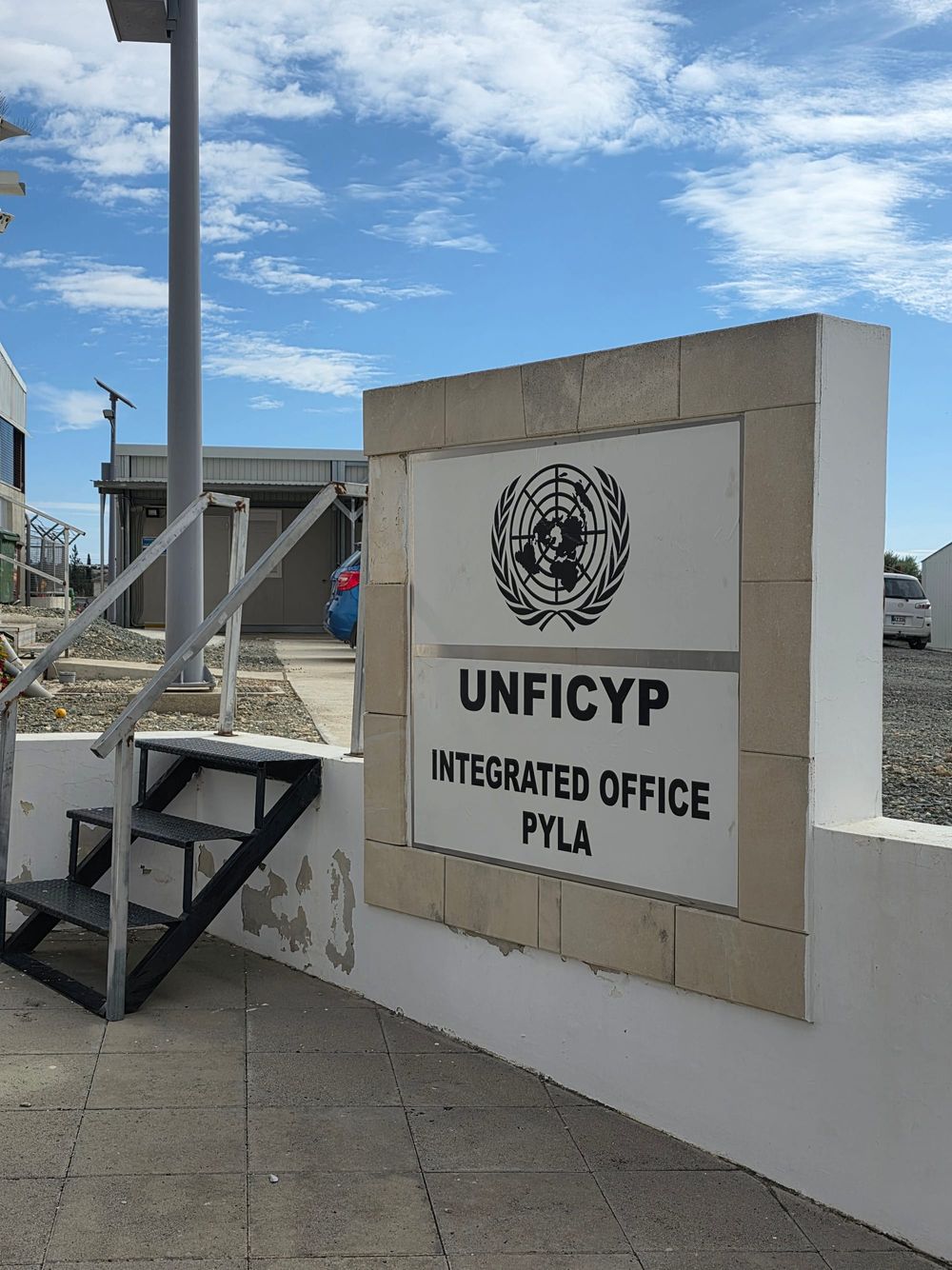
Just fifteen minutes away is the village of Pyla. It sits within the UN Buffer zone, adjacent to the Eastern Sovereign Base Area, which is technically UK territory. Uniquely, both Greek- and Turkish- Cypriots still live in the village. It’s an astonishing place. Businesses advertise two phone numbers, one on the Cypriot network and one on the Turkish one. Policing is provided by the United Nations. There are three churches and one Mosque, all pretty much on top of each other. The layering of a sleepy Mediterranean village with watch towers and UN personnel and vehicles is incongruous. Rob commented that he half-expected a gunfighter from an old Western movie to walk down the Main Street looking for outlaws while we sipped coffee in the bar.
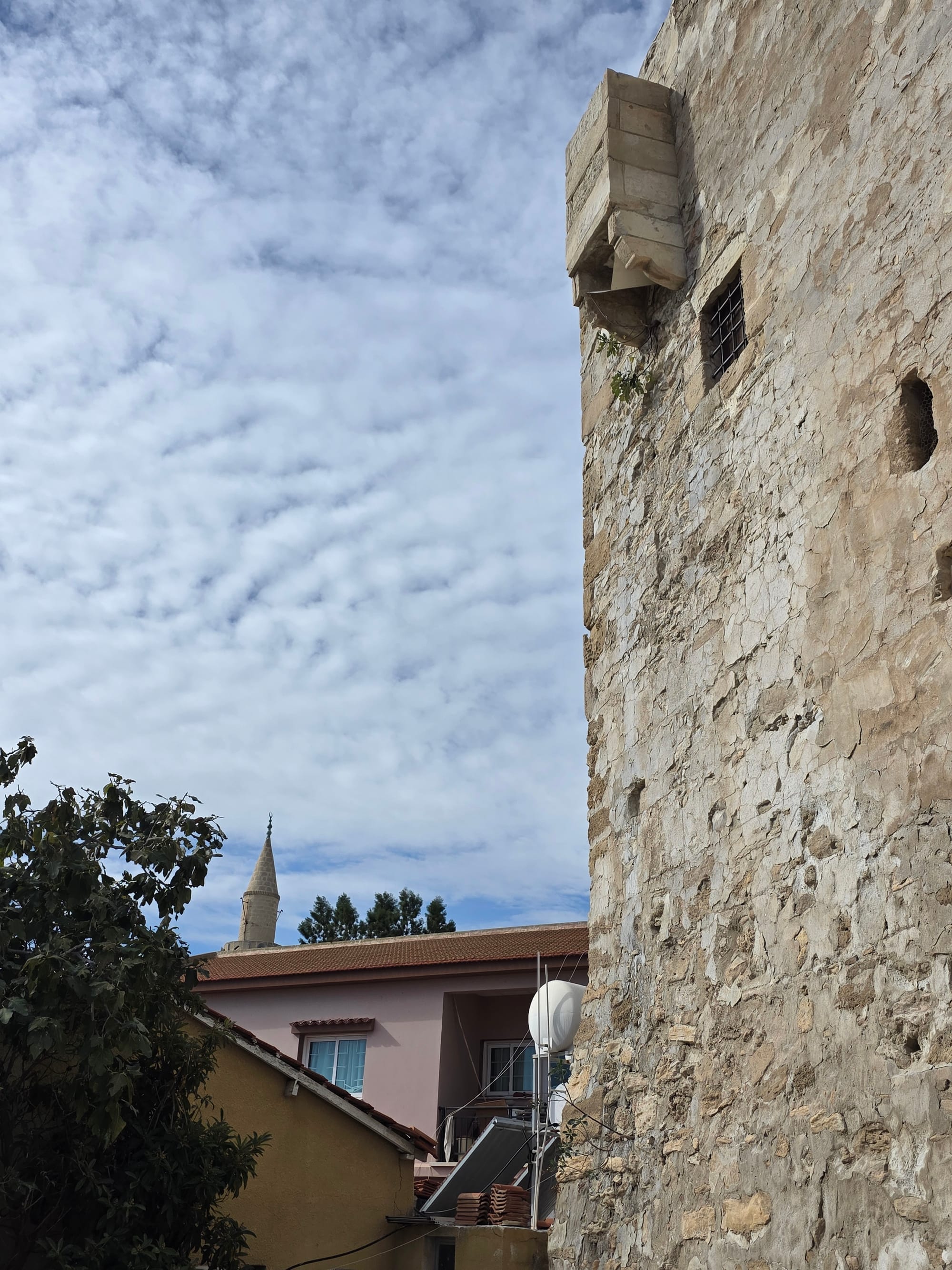
Do the two ethnicities get on? I don’t know. Largely, it would seem that the two communities live separately together. There’s Greek coffee shops and Turkish ones, but then again, this year, the two communities came together for a peace festival.
Somehow - the ages long conflict between two empires, the Byzantine and Ottoman, got gradually shrunk down to a tiny island, exacerbated by the British, of course.
Pyla is the latest example of ordinary citizens getting on with life, accommodating each other, AND history. I don’t discount or minimise the grievances that exist; I saw the evidence through binoculars and see it every day in Cyprus, abandoned lots in the midst of new development, where property belonging to displaced Turkish Cypriots is left fallow. However, throughout history, Cypriots have largely found ways to keep going, whatever flag is flown over government buildings.
If you enjoyed this piece, you can subscribe to Writer Interrupted for free and get new public posts in your inbox. And if you’d like to help me make more time for the writing, a paid subscription is a lovely way to do that. Either way, thanks for reading. I’m glad you’re here.
