The below was first published on Views from the Armchair, a project set up by my friend Hugh. It's a place for personal essays on great sporting occasions. Go have a read - and if you like it, sign up for new essays as they arrive.
Paris, 1995
"C'est bien, non?"
We nodded enthusiastically. Prop forwards in the mid 1990s were unlikely to turn down alcohol of any description, let alone free stuff. The amber liquid came from an Evian bottle and was ferociously strong.
"What is it, Stu?"
"Stu, I'm not sure. Home-made Calvados, maybe?"
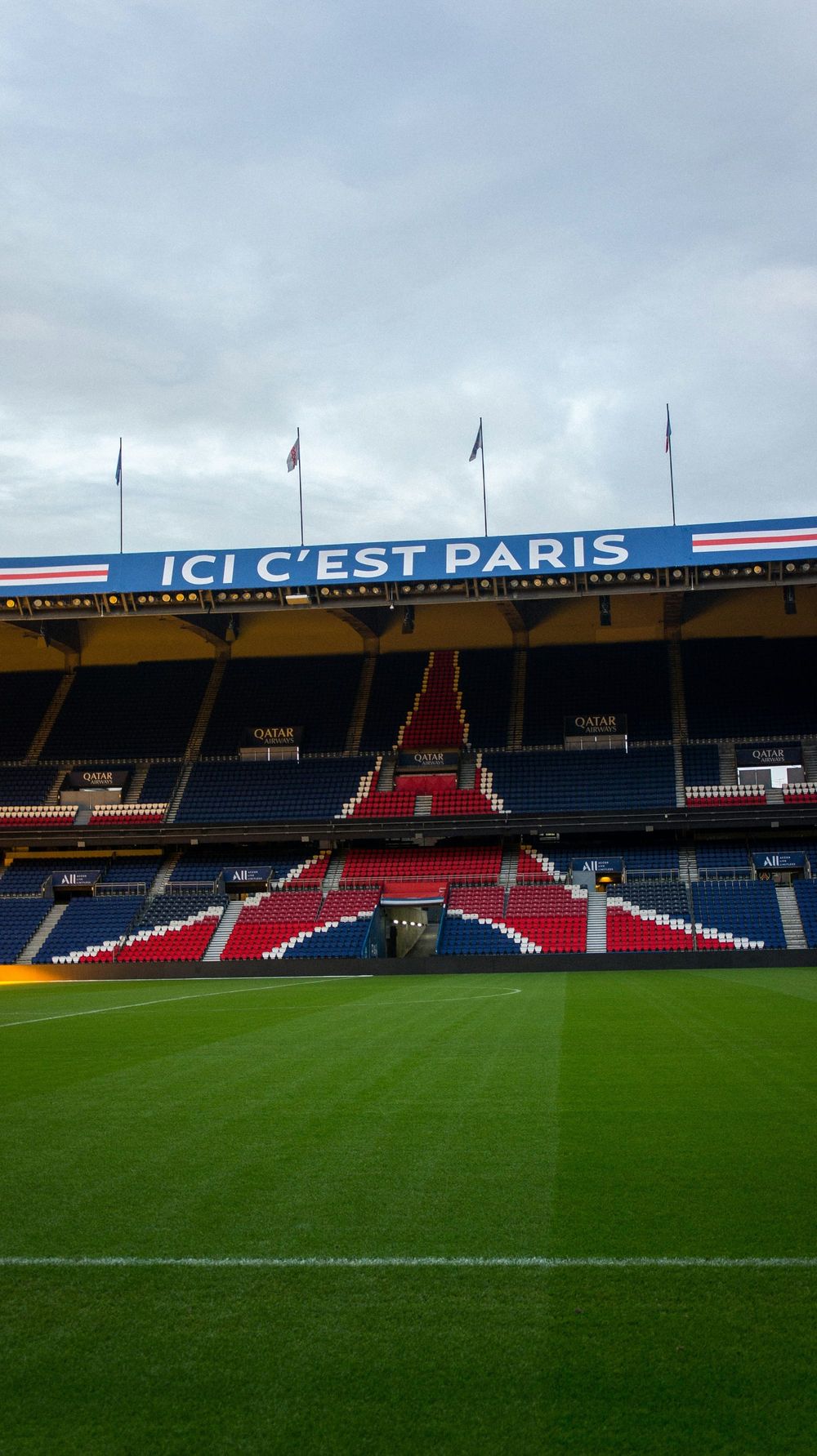
Conveniently, we are both Stuarts, a fact that our new French friends enjoyed immensely. We were at the Parc des Princes in Paris to watch Scotland take on France in the Five Nations.
Since the French Rugby Union had adopted the stadium in the southwest corner of Paris in the early 1970s, Scotland had found it impossible to win in France. Little suggested much would change this February afternoon in 1995.
Stu and I lived in Prague and played rugby for the Prague Barbarians. Our French teammates had organised a tour match, one had even put us up in his (soon to be ex-) girlfriend's flat. As a team, we'd bought tickets for the international outside the ground, and hence were spread all over the stadium. Somehow, the Stus had ended up with some French lunatic moonshine-smugglers behind the posts.
Le Match
The French fifteen was crammed with superstars. Some of the last greats of the amateur era. The three Philippes, Sella, Saint-André and Bernat-Salles. The French pack was grizzly, with faces only a mother could love. Seigne, Gonzalez and Califano in the front row, with Brouzet and Roumat the enforcers in the boiler room. The loose forwards Benazzi, Cabannes and Benetton were no picnic either. They were all grumpy, having already been beaten by England.
Scotland had a big pack, and had won their first game of the championship against Ireland under Captain Gavin Hastings, but as ever, the travelling fans had come to the City of Light more in hope than expectation. The last few years, Scotland had struggled to score, other than through the reliable boot of Hastings.
The French overwhelmed the Scottish line with three minutes on the clock, Saint-André dropping on a kick-through. The French were in the mood. A long afternoon beckoned for the Scots. The boys passed us the Calvados. Wave upon wave of French attacks were thwarted by last ditch tackles or poor Gallic decisions, and Scotland gradually came into the game. Hastings kicked a couple of penalties, the first from four metres inside his own half, and in between Gregor Townsend, or "Toonie" to his mates, waltzed over for a Scottish try. Every score was greeted by another swig of Calvados, which was melting and blistering our lips. Scotland held an unexpected 13–5 lead at half-time.
Both sides were playing fast open rugby, but the French kept making uncharacteristic errors, eschewing gilded chances. If they could improve their accuracy in the second half, then the game was far from over.
Bang! Bang! First a French penalty, then a drop goal. Les Bleus were on the march. 13–11 to Scotland. Captain Hastings padded the lead with another penalty. 16–11.
Just after the hour mark, a sweeping attack and the French fullback, Sadourny, was over in the corner. The Marseillaise rang out around the ground. The boys from Normandy were beaming, whether from confidence or because the hooch had completely destroyed their lips, I wasn't sure. 16 all.
Saint-André and Sadourny combined down the left, sending the French captain and winger over. More choruses of the Marseillaise. Once again, the conversion was missed. Three tries unconverted for the French. Seventy-two minutes played, and France had pulled ahead, playing champagne — or Calvados — rugby. 21–16. With eight minutes to go, Scotland had to throw the ball around. The French being French wanted to do the same. Chaos reigned in the middle of the field.
Stu turned to me. "I'm sorry, buddy, but I think the Scots have had their 'frites' so to speak."
"What's happened to your lips?" I asked, focusing on the blisters around his mouth. Truth is, he was right. The game was dying in the middle third of the pitch, with the clock ticking down. The referee raised his arm. French hands in the ruck. The Scots tapped and went from inside their own half. Two French tacklers engulfed Townsend, surely extinguishing Scotland's last chance.
At the time, I could barely make sense of it all. Suddenly, Gavin Hastings hit the line at pace, the ball inexplicably in his hands. No Frenchman got near him as he touched down beneath the posts. 21–21. Seventy-seven minutes played. Three to go. The Normans were on their feet. Everyone was on their feet.
"Magnifique!"
In great detail, the boys explained to us how Townsend had slipped a pass from the back of his hand into the path of the barrelling Hastings. The "Toonie flip" as the pass came to be known.
The French are a passionate and patriotic lot, but they know good rugby when they see it and they love to see it. More Calvados all round.
Hastings duly converted the try, giving Scotland their only ever victory in the Parc des Princes.
La Troisième Mi-Temps
La troisième mi-temps (the third half) is the French term for post-match celebrations. As Stu and I made our way back to the tour rendezvous point (a Basque Bar in central Paris), French fans came to shake our hands and share their myriad regional firewaters. "Bravo Scotland! Very good eh? Like ze French! Et Le Townsend! Magnifique."
Fortunately as front row forwards in our mid-twenties, we maintained the required constitution for the neat alcohol being foisted upon us, let down only by our wimpy lips which had literally been dissolved by the onslaught.
Paris bounced all night. If you were a Scot, your money was no good. There was always a Frenchman "For Le Townsend!" They were even prepared to overlook Stu's unfortunate Englishness, at least for the weekend.
Saturday became Sunday and the whole tour rejoiced in the festival atmosphere. Nobody could understand a word the Stus said. It turns out lips are important for speech. I daresay the neat spirit wasn't helping our diction either.
The Meaning
Was the match significant? No, not really. Later in the season, England beat Scotland to claim the Grand Slam, and in the Autumn both were swept aside by Jonah Lomu in the World Cup, while France beat Scotland in the pool stages before losing out to eventual winners South Africa. However, it changed the way that I watch sport. Those guys from Normandy taught me to rejoice in the playing of the game — to cherish style and panache over dogged nationalism. They weren't being sporting, they were overjoyed to see a close match decided by an act of audacious skill. They revelled in sharing the moment with us, the visitors. The atmosphere in the bars that night was one of genuine joy, a celebration of "l'esprit rugby."
People like you support my writing. Sign up for my free newsletter. Become a paid member, and get access to all my writing, including anything I publish, and a Member's Slack.